
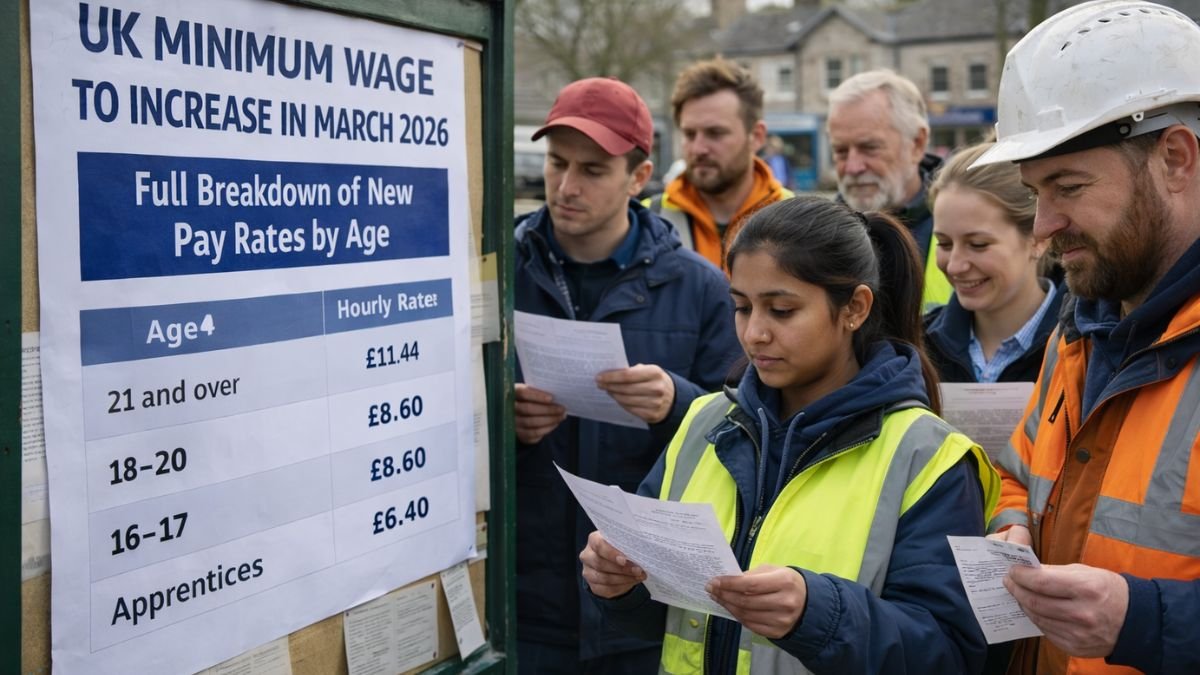
The UK government has confirmed a significant increase in the National Minimum Wage and National Living Wage, which will take effect on April 1, 2026.
The decision follows recommendations from the Low Pay Commission (LPC) and aims to support workers facing rising living costs while ensuring wages grow alongside the broader economy.
Millions of workers across the UK will benefit from the changes, particularly those in lower-paid sectors such as retail, hospitality, and social care.
The wage increase is designed to improve earnings for both adult employees and younger workers entering the labour market.
National Living Wage Increase for Adults
One of the most important changes is the rise in the National Living Wage (NLW) for workers aged 21 and over. Starting in April 2026, the NLW will increase from £12.21 to £12.71 per hour, representing a 50p hourly increase or around 4.1%.
For a full-time employee working 37.5 hours per week, this adjustment will provide an annual pay increase of roughly £975 before tax.
While this percentage increase is smaller than some previous rises, it still offers meaningful support to workers struggling with higher everyday expenses.
The government believes the new rate strikes a balance between helping workers and ensuring businesses can manage the additional wage costs.
Larger Pay Boost for Young Workers
The most substantial change in the 2026 wage update applies to workers aged 18 to 20. Their minimum wage will increase from £10.00 to £10.85 per hour, an 85p rise representing an 8.5% increase.
This larger adjustment is part of the government’s long-term strategy to narrow the gap between youth wages and the National Living Wage. A young employee working full-time could see their annual income increase by around £1,600 before tax.
These changes reflect ongoing efforts to create a more unified wage system that treats younger workers more equally within the labour market.
Higher Pay for Apprentices and Under-18 Workers
Workers aged 16 to 17, along with apprentices in the early stages of their training, will also benefit from a pay rise. Their hourly minimum wage will increase from £7.55 to £8.00, representing a 6% increase.
This adjustment ensures that young people entering the workforce or participating in apprenticeships continue to receive fair compensation.
However, it is important to note that apprentices aged 19 or older who have completed their first year of training must be paid the full National Living Wage rate of £12.71 per hour.
Why the 2026 Wage Increase Matters
The Low Pay Commission based its recommendations on economic forecasts, inflation expectations, and labour market conditions. Although wages have risen in recent years, many low-income workers continue to feel pressure from increasing costs such as housing, energy, and food.
The government aims to ensure that the lowest-paid employees share in wage growth while maintaining economic stability. However, businesses also face higher operating costs, including rising National Insurance contributions and pension expenses.
Balancing worker support with business sustainability remains a key challenge.
Impact on Businesses and Key Industries
Industries that rely heavily on minimum wage labour, including retail, hospitality, and care services, will experience the greatest impact from the new wage rates.
The sharp increase for workers aged 18 to 20 could significantly raise payroll costs for businesses employing younger staff. Experts have also warned about the risk of pay compression, where the difference between entry-level wages and supervisor salaries becomes smaller.
This could lead to additional wage adjustments within organisations to maintain fair pay structures.
New Fair Work Agency to Strengthen Enforcement
To ensure employers comply with the updated wage rules, the government will introduce a new Fair Work Agency (FWA) in April 2026.
This body will oversee enforcement of employment rights, including the National Minimum Wage, holiday pay, and Statutory Sick Pay. Employers who fail to pay the legal minimum wage could face penalties of up to 200% of the unpaid wages.
In serious cases, companies may also be publicly named by HMRC for non-compliance.
National Living Wage vs Real Living Wage
It is important to understand the difference between the National Living Wage and the Real Living Wage.
The National Living Wage is the legal minimum set by the government, while the Real Living Wage is a voluntary rate calculated by the Living Wage Foundation based on actual living costs.
For 2026, the Real Living Wage is expected to reach £13.45 across the UK and £14.80 in London, which is higher than the official government rate of £12.71 per hour.
Conclusion
The 2026 National Minimum Wage and National Living Wage increases represent a key step in supporting millions of UK workers facing rising living costs.
With higher hourly rates for adults, young workers, and apprentices, the changes aim to provide better financial stability for those on lower incomes.
While the increases will benefit employees, they also present challenges for businesses managing higher payroll costs.
As the government moves toward a more unified wage structure in the coming years, the debate over fair pay and economic sustainability is likely to continue.
FAQs
1. When will the new minimum wage rates take effect?
The updated National Minimum Wage and National Living Wage rates will start on April 1, 2026.
2. What is the new National Living Wage for 2026?
Workers aged 21 and over will receive £12.71 per hour, up from £12.21.
3. How much will workers aged 18–20 earn?
The minimum wage for 18–20-year-olds will increase to £10.85 per hour, an 8.5% rise from the previous rate.