


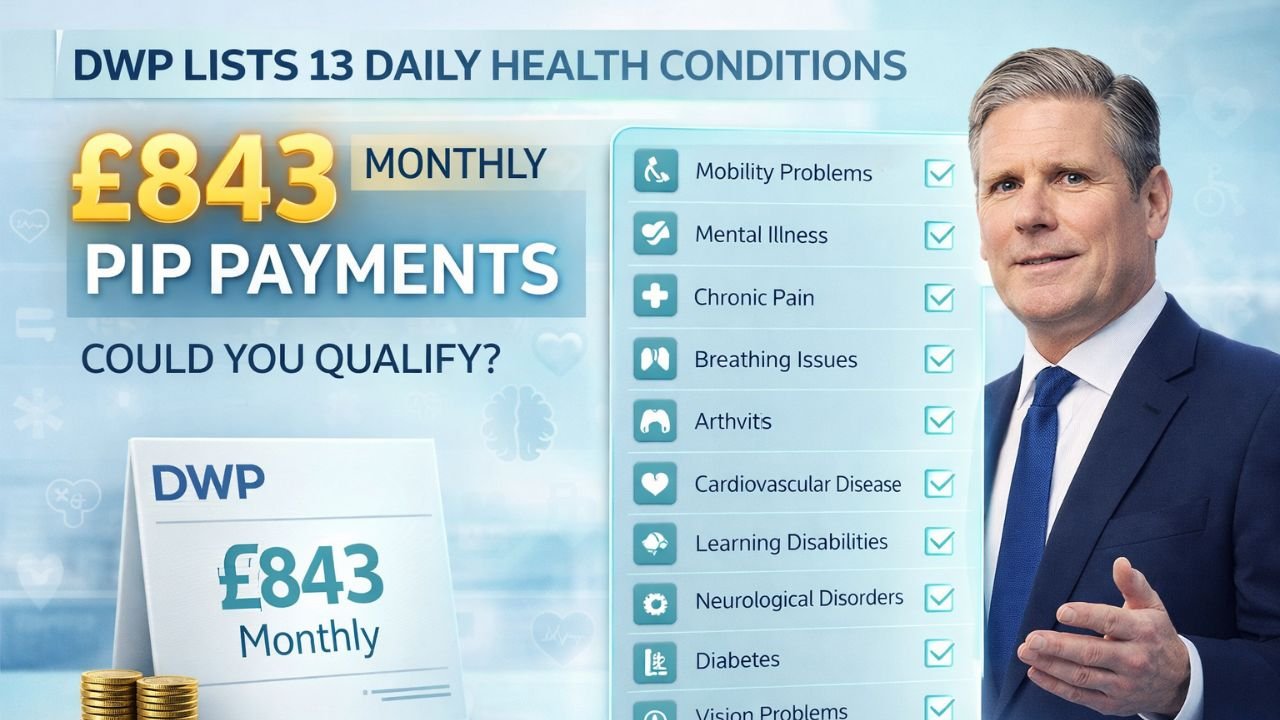
Millions of people across the United Kingdom rely on extra financial help when health problems make everyday life difficult. The Department for Work and Pensions (DWP) provides this support through Personal Independence Payment, commonly known as PIP. Many people are unaware that a wide range of daily health conditions could make them eligible for up to £843 per month.
What Is Personal Independence Payment (PIP)?
Personal Independence Payment is a non-means-tested benefit designed to help people aged 16 to State Pension age who live with long-term health conditions or disabilities. It is not based on income or savings. Instead, eligibility depends on how your condition affects your daily living and mobility.
PIP is divided into two parts:
Daily Living Component
This supports individuals who struggle with everyday activities such as cooking, washing, dressing, managing medication, or communicating.
Mobility Component
This supports people who find it difficult to move around or plan and follow journeys.
Each component has two payment levels: standard and enhanced. Those who qualify for the enhanced rate of both components can receive up to £843 per month.
How Much Can You Get in PIP Payments?
The maximum monthly payment of £843 comes from receiving the enhanced rate for both components.
Current PIP Weekly Rates
| Component | Standard Rate (Weekly) | Enhanced Rate (Weekly) |
|---|---|---|
| Daily Living | £72.65 | £108.55 |
| Mobility | £28.70 | £75.75 |
If someone qualifies for both enhanced components:
£108.55 + £75.75 = £184.30 per week
£184.30 x 52 weeks ÷ 12 months ≈ £843 per month
This means individuals with severe health limitations may receive significant financial support through monthly PIP payments in the UK.
The 13 Daily Health Conditions That May Qualify
The DWP does not award PIP based solely on diagnosis. Instead, the decision depends on how your condition affects your daily life. However, official data shows that the following 13 categories frequently qualify.
1. Arthritis
Arthritis can cause chronic pain, stiffness, and limited mobility. Many people with rheumatoid arthritis or osteoarthritis qualify due to difficulties with movement and daily tasks.
2. Back Pain and Musculoskeletal Conditions
Chronic back pain, spinal injuries, and joint problems can severely affect mobility and personal care activities.
3. Anxiety Disorders
Generalised anxiety disorder, panic disorder, and social anxiety can significantly impact daily functioning and independence.
4. Depression
Severe depression may make it difficult to manage daily living tasks, communicate, or engage socially.
5. Autism Spectrum Disorder
Autism can affect communication, social interaction, and the ability to manage daily routines.
6. Learning Disabilities
Conditions such as Down syndrome or cognitive impairment can impact independent living.
7. ADHD
Attention Deficit Hyperactivity Disorder may cause difficulties in planning, organisation, and completing tasks safely.
8. Epilepsy
Frequent seizures may require supervision and impact mobility and safety.
9. Diabetes (with complications)
While diabetes alone does not automatically qualify, complications such as neuropathy or vision issues may.
10. Respiratory Conditions
Chronic asthma, COPD, and other breathing disorders can limit mobility and physical stamina.
11. Heart Conditions
Serious cardiovascular problems can restrict physical movement and independence.
12. Neurological Conditions
Multiple sclerosis, Parkinson’s disease, and similar disorders often qualify due to progressive mobility issues.
13. Chronic Pain Conditions
Fibromyalgia and other chronic pain syndromes can severely affect daily life and work capability.
How PIP Eligibility Is Decided
Receiving PIP depends on a points-based system. Claimants are assessed on specific daily living and mobility activities.
Daily Living Activities Include:
- Preparing food
- Eating and drinking
- Managing treatments
- Washing and bathing
- Dressing and undressing
- Communicating verbally
- Reading and understanding information
- Engaging socially
- Managing money
Mobility Activities Include:
- Planning and following journeys
- Moving around physically
Points are awarded depending on the level of difficulty. To qualify:
- 8 to 11 points = Standard rate
- 12 or more points = Enhanced rate
This structured PIP eligibility assessment ensures that payments reflect the level of need rather than the condition itself.
Long-Term Conditions Requirement
To qualify for Personal Independence Payment for long-term health conditions in the UK, your condition must:
- Have lasted at least three months
- Be expected to continue for at least nine months
Terminal illness claims follow different fast-track rules.
How to Apply for PIP
Applying for DWP Personal Independence Payment involves several steps.
Step 1: Start a Claim
You must contact the DWP to begin your claim. This can be done by phone.
Step 2: Complete the PIP2 Form
You will receive a detailed form asking how your condition affects daily living and mobility. It is crucial to provide thorough, real-life examples.
Step 3: Assessment
Most applicants attend a medical assessment conducted by an independent health professional.
Step 4: Decision Letter
You will receive a letter explaining your points and award level.
Common Reasons for Rejection
Many applications are initially rejected due to:
- Lack of detailed evidence
- Incomplete form responses
- Underestimating how conditions affect daily tasks
It is important to clearly explain worst-day scenarios rather than average days.
Can You Appeal a PIP Decision?
Yes. If you disagree with the decision:
- Request a Mandatory Reconsideration
- Appeal to a tribunal if needed
Many appeals are successful when proper evidence is provided.
How Long Does PIP Last?
Awards can last:
- 1–2 years for short-term review
- 3–5 years for ongoing conditions
- Ongoing awards for severe, lifelong disabilities
Reviews ensure payments match current needs.
Extra Benefits Linked to PIP
Receiving PIP may unlock additional financial support:
- Carer’s Allowance for someone caring for you
- Blue Badge parking permit
- Vehicle tax reductions
- Motability scheme access
- Housing benefit increases
This makes understanding eligibility for maximum £843 monthly PIP payments even more important.
Why Many People Miss Out
Thousands of people with qualifying daily health conditions never apply. Common reasons include:
- Assuming they will not qualify
- Thinking income affects eligibility
- Fear of assessment process
Remember, PIP is not means-tested and focuses entirely on daily impact.
Final Thoughts on DWP PIP Payments
The DWP’s list of 13 daily health conditions shows that many physical and mental health problems may qualify individuals for up to £843 monthly PIP payments. However, eligibility is determined by how your condition affects everyday life rather than the diagnosis alone.
If you struggle with preparing meals, dressing, moving around, managing medication, or interacting socially because of a long-term condition, it may be worth applying. Understanding the detailed PIP eligibility criteria for daily living and mobility support in the UK can significantly improve your chances of receiving financial assistance.